
Entertainment
Alesya Kuznetsova: Stories from the Hill of Novogrudok.
When History Comes Alive.
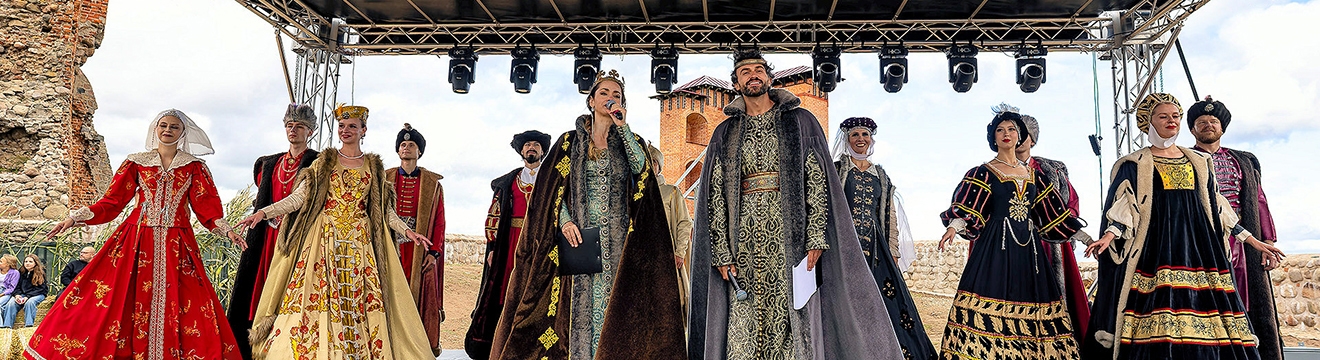
Olga Venskaya, Mikhail Svito and the Khoroshki Ens (Source: Roberto Magni By Foto ReD Photographic Agency )

Alesya Kuznetsova, writer, director and producer
(Source: Roberto Magni By Foto ReD Photographic Agency )
(Source: Roberto Magni By Foto ReD Photographic Agency )
During the Vytynank-Vybyvank: The Lacy Code of Novogrudok festival, I had the opportunity to see and photograph one of the most unusual projects in the festival program — the music-and-theater production Stories on Castle Hill, which brought together dramatic actors, an opera soloist, instrumental musicians, and the national ensemble Khoroshki.
The idea was conceived and directed by writer, director, and producer Alesia Kouznetsova, who has been working in Novogrudok for several years and creating major cultural events for the city.
Stories on Castle Hill became both part of the festival and the starting point for Kouznetsova’s new original project — a project about the historic towns of Belarus, told through human lives, love, music, theater, and documented history.
The idea was conceived and directed by writer, director, and producer Alesia Kouznetsova, who has been working in Novogrudok for several years and creating major cultural events for the city.
Stories on Castle Hill became both part of the festival and the starting point for Kouznetsova’s new original project — a project about the historic towns of Belarus, told through human lives, love, music, theater, and documented history.
ALESIA,TELL US ABOUT YOUR JOURNEY WITH THE FESTIVAL IN NOVOGRUDOK
I have been working in Novogrudok for three years now, creating cultural projects for the festival and developing its overall artistic concept.
For me, the Novogrudok festival has never been simply a collection of concerts. Every time, it is important for me to find an image through which I can tell the story of the city itself — its history, its character, its traditions, its life today, its people.
Three years ago, I was invited to create a three-day historical festival in Novogrudok to mark the city’s 980th anniversary, and I immersed myself in the history and legends of this ancient town. I tried to sense its character and hear the stories the city itself seemed to want to tell.
And I quite literally fell in love with Novogrudok — with its emerald hills, its little streets, its low, brightly colored houses from the nineteenth and early twentieth centuries and, to be honest, with the wonderful people who live here today.
It is an extraordinary city. Its soul is feminine, but its character is masculine. And I wanted to emphasize that in the concerts and programs I created.
I have been working in Novogrudok for three years now, creating cultural projects for the festival and developing its overall artistic concept.
For me, the Novogrudok festival has never been simply a collection of concerts. Every time, it is important for me to find an image through which I can tell the story of the city itself — its history, its character, its traditions, its life today, its people.
Three years ago, I was invited to create a three-day historical festival in Novogrudok to mark the city’s 980th anniversary, and I immersed myself in the history and legends of this ancient town. I tried to sense its character and hear the stories the city itself seemed to want to tell.
And I quite literally fell in love with Novogrudok — with its emerald hills, its little streets, its low, brightly colored houses from the nineteenth and early twentieth centuries and, to be honest, with the wonderful people who live here today.
It is an extraordinary city. Its soul is feminine, but its character is masculine. And I wanted to emphasize that in the concerts and programs I created.
After the festival, we were flooded with messages and words of thanks from people. And we realized that we had only one problem: you cannot celebrate a city’s 980th anniversary every year.
So together with the city administration and its cultural department, we came up with an annual festival: Vytynanka-Vybyvanka: The Lacy Code of Novogrudok.
The festival is devoted to Novogrudok’s unique tradition of creating intricate openwork patterns from paper. Incidentally, the Belarusian tradition of vytsinanka, or paper cutting, was added to UNESCO’s Intangible Cultural Heritage list several years ago.
In Novogrudok, however, the tradition is unique because of the technique itself: here the patterns are not cut out — they are punched out. The craftswoman works almost like a sculptor, cutting away everything unnecessary, removing fragments from a blank sheet of paper until an intricate lace-like pattern gradually emerges.
And I carry the theme of those openwork patterns through all the events I create as part of the festival.
So together with the city administration and its cultural department, we came up with an annual festival: Vytynanka-Vybyvanka: The Lacy Code of Novogrudok.
The festival is devoted to Novogrudok’s unique tradition of creating intricate openwork patterns from paper. Incidentally, the Belarusian tradition of vytsinanka, or paper cutting, was added to UNESCO’s Intangible Cultural Heritage list several years ago.
In Novogrudok, however, the tradition is unique because of the technique itself: here the patterns are not cut out — they are punched out. The craftswoman works almost like a sculptor, cutting away everything unnecessary, removing fragments from a blank sheet of paper until an intricate lace-like pattern gradually emerges.
And I carry the theme of those openwork patterns through all the events I create as part of the festival.
What makes me especially happy now is walking through the city and seeing not only the huge number of people who already look forward to the festival and come to Novogrudok specifically for those days, but also how many people want to experience the tradition itself and take part in workshops.
This year we also created a large children’s area, and right beside the stage even very young children could try their hand at vytsinanka-vybyvanka.
That is how a tradition remains alive and gradually becomes a genuine symbol — even a brand — of the city.
And I am happy that, several years later, I now see the paper-cut castle that serves as our festival logo everywhere in Novogrudok. My son and I once came up with it together — I have three sons, and all three are very creative and talented — and today I see it on the windows of public buildings, on delicious local gingerbread, on product packaging, on festival banners.
This year we also created a large children’s area, and right beside the stage even very young children could try their hand at vytsinanka-vybyvanka.
That is how a tradition remains alive and gradually becomes a genuine symbol — even a brand — of the city.
And I am happy that, several years later, I now see the paper-cut castle that serves as our festival logo everywhere in Novogrudok. My son and I once came up with it together — I have three sons, and all three are very creative and talented — and today I see it on the windows of public buildings, on delicious local gingerbread, on product packaging, on festival banners.
Even the enormous stage in the central square, created for a television project, echoes the outline of our lace-like castle — something we once imagined in the quiet of a sun-filled
room when we were only beginning to work on the festival concept and the whole thing was literally being born on a blank sheet of paper.
Because that is how a festival begins, after all. First it appears in the mind of its creator and director. Then it begins to emerge on paper. Then a team of performers, directors, producers, and technical specialists gathers around it — and the project starts to live, so that a few months later it can move out into the streets of the city.
room when we were only beginning to work on the festival concept and the whole thing was literally being born on a blank sheet of paper.
Because that is how a festival begins, after all. First it appears in the mind of its creator and director. Then it begins to emerge on paper. Then a team of performers, directors, producers, and technical specialists gathers around it — and the project starts to live, so that a few months later it can move out into the streets of the city.
BUT YOUR OWN PROFESSIONAL STORY BEGAN LONG BEFORE NOVOGRUDOK. WHAT PATH HAVE YOU TAKEN OVER ALL THESE YEARS?
I suppose I am not very fond of counting years or projects myself, but once we tried — and it turned out that over twenty-two years in this profession I have already organized more than 3,500 concerts, concert programs, and performances.
And they have been completely different.
I have created small, intimate projects where only a few performers are literally within arm’s reach of the audience, and enormous events involving more than a thousand people at once on some of the country’s most prestigious stages.
Those are completely different kinds of directing.
A large project requires architecture above all — enormous coordination, the ability to see dozens of processes at the same time.
I suppose I am not very fond of counting years or projects myself, but once we tried — and it turned out that over twenty-two years in this profession I have already organized more than 3,500 concerts, concert programs, and performances.
And they have been completely different.
I have created small, intimate projects where only a few performers are literally within arm’s reach of the audience, and enormous events involving more than a thousand people at once on some of the country’s most prestigious stages.
Those are completely different kinds of directing.
A large project requires architecture above all — enormous coordination, the ability to see dozens of processes at the same time.
In an intimate production, by contrast, everything becomes almost jewel-like in its precision. You cannot hide behind scale, lighting, or the number of performers. Every gesture, every word, every pause suddenly matters.
I have also spent many years working with the Belarusy Art Group, which today is one of the most significant contemporary Belarusian vocal groups. Belarus, after all, has always been known for its ensembles. People remember how popular Pesnyary under Vladimir Mulyavin once were, Syabry with Anatoly Yarmolenko, Verasy...
So I think our group was born out of that rich Belarusian ensemble tradition.
With the Belarusy Art Group we once went on a major tour through the Baltic countries, performed at the opening of the Belarusian consulate in Finland, traveled to a huge number of cities — and almost everywhere we played to sold-out audiences.
I have also spent many years working with the Belarusy Art Group, which today is one of the most significant contemporary Belarusian vocal groups. Belarus, after all, has always been known for its ensembles. People remember how popular Pesnyary under Vladimir Mulyavin once were, Syabry with Anatoly Yarmolenko, Verasy...
So I think our group was born out of that rich Belarusian ensemble tradition.
With the Belarusy Art Group we once went on a major tour through the Baltic countries, performed at the opening of the Belarusian consulate in Finland, traveled to a huge number of cities — and almost everywhere we played to sold-out audiences.
In recent years, my life has also included quite a lot of television, not only concerts and festivals.
And I am especially interested in projects where we essentially create a new artist almost before the audience’s eyes.
Usually, viewers see the finished person on stage — beautiful, confident, standing in the spotlight.
But I am endlessly fascinated by the road that comes before that light: the doubts, the search for the right song, the unsuccessful rehearsals, the moment when suddenly something begins to work.
Perhaps that is why, both in my books and in my directing, I am always trying to look a little beyond the visible result — toward the person underneath.
And I am especially interested in projects where we essentially create a new artist almost before the audience’s eyes.
Usually, viewers see the finished person on stage — beautiful, confident, standing in the spotlight.
But I am endlessly fascinated by the road that comes before that light: the doubts, the search for the right song, the unsuccessful rehearsals, the moment when suddenly something begins to work.
Perhaps that is why, both in my books and in my directing, I am always trying to look a little beyond the visible result — toward the person underneath.
THIS YEAR THE FESTIVAL CONSISTED OF SEVEN COMPLETELY DIFFERENT EVENTS, HOW DID YOU BUILD THE PROGRAM?
The festival opened with a large open-air symphonic concert-ball beside the walls of the ancient Church of St. Michael the Archangel — Azhurnyya Mary (Lacy Dreams).
The program brought together the symphony orchestra and choir of the Belarusian Television and Radio Company, soloists from the Bolshoi Opera Theater, dance companies, and living-statue performers.
Together we created a very special, almost intimate space in the courtyard beside the walls of a church with four centuries of history.
And through music, movement, light, and the voices of the performers, we reflected on the feminine soul of the city — what she has been through the centuries, how she relates to world culture and at the same time preserves a Belarusian tradition of her own.
And a woman can be very different.
So the music changed with her throughout the evening: at times passionate and desperate, then tender and contemplative, then impetuous — and then suddenly turning into aching, deeply emotional waltzes.
The festival opened with a large open-air symphonic concert-ball beside the walls of the ancient Church of St. Michael the Archangel — Azhurnyya Mary (Lacy Dreams).
The program brought together the symphony orchestra and choir of the Belarusian Television and Radio Company, soloists from the Bolshoi Opera Theater, dance companies, and living-statue performers.
Together we created a very special, almost intimate space in the courtyard beside the walls of a church with four centuries of history.
And through music, movement, light, and the voices of the performers, we reflected on the feminine soul of the city — what she has been through the centuries, how she relates to world culture and at the same time preserves a Belarusian tradition of her own.
And a woman can be very different.
So the music changed with her throughout the evening: at times passionate and desperate, then tender and contemplative, then impetuous — and then suddenly turning into aching, deeply emotional waltzes.
I wanted the audience not simply to listen to a concert, but gradually to build, out of music, images, and movement, their own portrait of Novogrudok — a city that, as I have already said, has a feminine soul and a masculine character.
That same evening there was also a pop concert by the Belarusy Art Group — a popular male vocal group working with multipart harmony, combining professional classical technique with contemporary popular sound and arrangements.
And I have been very happy to be the producer and concert director of this group for twenty-two years.
Because that was where my own story as a producer began.
Yes, once two people met — a young television journalist and a student at the Academy of Music, a young composer and choral conductor.
From that meeting came first our family, then the group, three sons, our production company, thousands of concerts and projects, hundreds of songs and stage productions.
And for me it was especially symbolic that the concert in Novogrudok ended with the Belarusy Art Group and the people of the city singing the Novogrudok anthem together — a song my husband, composer and group leader Valery Shmat, wrote for the first festival.
That same evening there was also a pop concert by the Belarusy Art Group — a popular male vocal group working with multipart harmony, combining professional classical technique with contemporary popular sound and arrangements.
And I have been very happy to be the producer and concert director of this group for twenty-two years.
Because that was where my own story as a producer began.
Yes, once two people met — a young television journalist and a student at the Academy of Music, a young composer and choral conductor.
From that meeting came first our family, then the group, three sons, our production company, thousands of concerts and projects, hundreds of songs and stage productions.
And for me it was especially symbolic that the concert in Novogrudok ended with the Belarusy Art Group and the people of the city singing the Novogrudok anthem together — a song my husband, composer and group leader Valery Shmat, wrote for the first festival.
In that music he tried to combine the strength and ancient character of the city with its present-day life and its movement forward.
And perhaps that is why I especially love the fact that today this song is sung not only by the performers onstage, but by the people of Novogrudok themselves.
Then the evening continued with the youth project Lacy Beat, which quite literally gave the festival a new rhythm.
After the symphonic concert-ball and the performance by the Belarusy Art Group, the festival space seemed to switch to a different frequency — bolder, more contemporary, more energetic.
It mattered to me that the youth program should not look like a separate appendix to the festival, but should become a natural part of its overall dramatic structure.
Immediately afterward came a dance party and light show — a battle between two DJs, host and MC Pavel Adakhovsky, dancers, music, and light.
So within a single evening, the city could sound completely different from one moment to the next.
And perhaps that is why I especially love the fact that today this song is sung not only by the performers onstage, but by the people of Novogrudok themselves.
Then the evening continued with the youth project Lacy Beat, which quite literally gave the festival a new rhythm.
After the symphonic concert-ball and the performance by the Belarusy Art Group, the festival space seemed to switch to a different frequency — bolder, more contemporary, more energetic.
It mattered to me that the youth program should not look like a separate appendix to the festival, but should become a natural part of its overall dramatic structure.
Immediately afterward came a dance party and light show — a battle between two DJs, host and MC Pavel Adakhovsky, dancers, music, and light.
So within a single evening, the city could sound completely different from one moment to the next.
On the second day, we presented two of our programs — The Voice of Castle Hill and Stories on Castle Hill.
We conceived The Voice of Castle Hill as a warm city program in which Novogrudok could speak to the audience not only through music, but through its traditions, atmosphere, character, and through the people who live there today.
The culmination came when the mayor prepared a traditional cheese soup himself and served it to festival guests.
And I really love this story itself: the head of the city cooks a dish with his own hands and serves it to people. At moments like that, a large festival suddenly becomes very warm, homelike, and intimate.
And the second project — Stories on Castle Hill — is the one where you and I first met.
We conceived The Voice of Castle Hill as a warm city program in which Novogrudok could speak to the audience not only through music, but through its traditions, atmosphere, character, and through the people who live there today.
The culmination came when the mayor prepared a traditional cheese soup himself and served it to festival guests.
And I really love this story itself: the head of the city cooks a dish with his own hands and serves it to people. At moments like that, a large festival suddenly becomes very warm, homelike, and intimate.
And the second project — Stories on Castle Hill — is the one where you and I first met.
I NOTICED THAT YOU WERE ESPECIALLY PLEASED THAT I WAS PHOTOGRAPHING THAT PARTICULAR PRODUCTION.
Yes, I was very pleased.
You stayed and documented the event almost from beginning to end, with a very attentive, professional eye.
I think this production contains a very important part of our artistic work and of our cultural vision of the city.
Yes, I was very pleased.
You stayed and documented the event almost from beginning to end, with a very attentive, professional eye.
I think this production contains a very important part of our artistic work and of our cultural vision of the city.
WHAT IS THE MAIN THREAD RUNNING THROUGH “ STORIES ON CASTLE HILL” ?
Through a music-and-theater production based on documentary material, we told the story of Novogrudok by following three great love stories and taking the audience on a journey farther and farther back in time.
We began in the twentieth century, then moved to the nineteenth, and finally reached ancient medieval legends that have formed part of the city’s identity for centuries.
You stayed until the very end and watched the performance with completely fresh eyes — as someone who knew nothing about our concept or preparation, had not seen the rehearsals, and did not know why I had chosen precisely these stories and these performers.
Through a music-and-theater production based on documentary material, we told the story of Novogrudok by following three great love stories and taking the audience on a journey farther and farther back in time.
We began in the twentieth century, then moved to the nineteenth, and finally reached ancient medieval legends that have formed part of the city’s identity for centuries.
You stayed until the very end and watched the performance with completely fresh eyes — as someone who knew nothing about our concept or preparation, had not seen the rehearsals, and did not know why I had chosen precisely these stories and these performers.
And for me this project was probably the most personal one in the entire festival program.
For a long time I have been thinking about how to tell the history of a city in a way that stops it from being simply a list of dates, names, and architectural monuments.
I wanted to enter history through human lives, through love stories, through the dreams, fears, and doubts of those who lived on this land in different centuries or became part of the city’s story.
And I think it was while working on this production that I first clearly felt that something much larger was beginning to grow out of a single performance.
For a long time I have been thinking about how to tell the history of a city in a way that stops it from being simply a list of dates, names, and architectural monuments.
I wanted to enter history through human lives, through love stories, through the dreams, fears, and doubts of those who lived on this land in different centuries or became part of the city’s story.
And I think it was while working on this production that I first clearly felt that something much larger was beginning to grow out of a single performance.
WHAT PRINCIPLE CONNECTS THE STORIES TOLD IN “ STORIES ON CASTLE HILL”?
Three love stories connected with Novogrudok and separated by centuries.
I built this music-and-theater program as a journey from the present farther and farther into the past — from a story whose witnesses can still be found today, to the events of the nineteenth century, and then to an ancient legend from the thirteenth century.
Three love stories connected with Novogrudok and separated by centuries.
I built this music-and-theater program as a journey from the present farther and farther into the past — from a story whose witnesses can still be found today, to the events of the nineteenth century, and then to an ancient legend from the thirteenth century.
LET’S BEGIN WITH THE TWENTIETH CENTURY.
We told the love story of French actress Marina Vlady and Vladimir Vysotsky.
In 1969, Vysotsky was in this area during the filming of a movie — not as an actor; he was writing songs for the film — and Marina came to join him.
There are documents, testimonies, and memories of this story that are still alive among people who witnessed those days.
By 1969, Marina Vlady was already a famous European actress and a prize winner at the Cannes Film Festival. Millions of people in different countries watched her films. She was recognized and admired.
Vladimir Vysotsky, meanwhile, was already becoming a genuine phenomenon in the Soviet Union.
He was known as an actor at Moscow’s Taganka Theater, while his songs traveled throughout the country on tape recordings. People copied them for one another, listened to them at home, passed them from hand to hand.
His official level of fame still bore almost no relation to the enormous popular love that already surrounded him.
We told the love story of French actress Marina Vlady and Vladimir Vysotsky.
In 1969, Vysotsky was in this area during the filming of a movie — not as an actor; he was writing songs for the film — and Marina came to join him.
There are documents, testimonies, and memories of this story that are still alive among people who witnessed those days.
By 1969, Marina Vlady was already a famous European actress and a prize winner at the Cannes Film Festival. Millions of people in different countries watched her films. She was recognized and admired.
Vladimir Vysotsky, meanwhile, was already becoming a genuine phenomenon in the Soviet Union.
He was known as an actor at Moscow’s Taganka Theater, while his songs traveled throughout the country on tape recordings. People copied them for one another, listened to them at home, passed them from hand to hand.
His official level of fame still bore almost no relation to the enormous popular love that already surrounded him.
Imagine it: a woman whose face is known to European audiences and a man whose songs are being heard across an enormous country wake up one morning in a hayloft in a Belarusian village near Novogrudok.
They drink warm goat’s milk, eat draniki — Belarusian potato pancakes — take each other by the hand and go walking through the hills.
They visit the excavations at the castle, talk to local people, watch old fir trees reflected in the lakes and the sun rising over the town.
And nearby, songs are being born that will go on to outlive the decades.
They become part of the city’s story, while the city becomes part of their lives.
They drink warm goat’s milk, eat draniki — Belarusian potato pancakes — take each other by the hand and go walking through the hills.
They visit the excavations at the castle, talk to local people, watch old fir trees reflected in the lakes and the sun rising over the town.
And nearby, songs are being born that will go on to outlive the decades.
They become part of the city’s story, while the city becomes part of their lives.
Some researchers and local tradition associate that visit with the creation of one of Vysotsky’s best-known love songs, Lyricheskaya (Lyrical Song).
During the same days, he was also working on songs for the film Sons Go to Battle.
According to recollections, Marina Vlady loved these places so much that she did not want to leave and asked friends to persuade Volodya to stay a little longer.
People who remembered them from those days described them as two young people happy in each other — and happy in each other’s talent.
During the same days, he was also working on songs for the film Sons Go to Battle.
According to recollections, Marina Vlady loved these places so much that she did not want to leave and asked friends to persuade Volodya to stay a little longer.
People who remembered them from those days described them as two young people happy in each other — and happy in each other’s talent.
THEN THE AUDIENCE MOVES INTO THE NINETEENTH CENTURY:
Exactly.
We tell the story of the impossible love between Adam Mickiewicz and Maryla Vereshchako.
They met near Novogrudok when they were young.
Maryla married Wawrzyniec Puttkamer, a count from an old German family — the same family line from which Otto von Bismarck’s wife also came.
But despite his German roots, Count Puttkamer was born and spent his entire life on Belarusian lands.
His estate is still preserved near the Belarusian town of Voronovo, just as the house where Adam Mickiewicz lived has been preserved in Novogrudok.
Exactly.
We tell the story of the impossible love between Adam Mickiewicz and Maryla Vereshchako.
They met near Novogrudok when they were young.
Maryla married Wawrzyniec Puttkamer, a count from an old German family — the same family line from which Otto von Bismarck’s wife also came.
But despite his German roots, Count Puttkamer was born and spent his entire life on Belarusian lands.
His estate is still preserved near the Belarusian town of Voronovo, just as the house where Adam Mickiewicz lived has been preserved in Novogrudok.
So — Adam Mickiewicz and Maryla Vereshchako.
They did not spend their lives together.
They did not build a home together.
They did not grow old side by side...
But sometimes love finds an entirely different continuation.
It becomes poetry.
Sometimes art can give love what fate could not — immortality.
Mickiewicz continued along the path that would make him one of Europe’s greatest poets.
But the memory of this love, which began on the land around Novogrudok, remained forever in his life and in his work.
They did not spend their lives together.
They did not build a home together.
They did not grow old side by side...
But sometimes love finds an entirely different continuation.
It becomes poetry.
Sometimes art can give love what fate could not — immortality.
Mickiewicz continued along the path that would make him one of Europe’s greatest poets.
But the memory of this love, which began on the land around Novogrudok, remained forever in his life and in his work.
AND FINALLY WE REACH THE LEGENDARY ORIGINS OF NOVOGRUDOK – ONE OF THE MOST IMPORTANT EARLY CENTERS OF THE GRAND DUCHY OF LITHUANIA, OFTEN REFERRED TO IN BELARUSIAN HISTORICAL TRADITION AS ITS FIRST CAPITAL.
Yes.
We travel back to the thirteenth century, where documented history begins to intertwine with myth.
We tell a legend according to which the chronicled Prince Mindaug met Marta in the forests near Novogrudok, and she was later crowned as the first queen beside him.
And according to one version of the legend, the coronation took place right here — at Novogrudok Castle, beside the very walls where our production was performed, on this very Castle Hill.
We do not know how the two of them actually met for the first time.
History has preserved neither the day, nor the place, nor their first words.
Yes.
We travel back to the thirteenth century, where documented history begins to intertwine with myth.
We tell a legend according to which the chronicled Prince Mindaug met Marta in the forests near Novogrudok, and she was later crowned as the first queen beside him.
And according to one version of the legend, the coronation took place right here — at Novogrudok Castle, beside the very walls where our production was performed, on this very Castle Hill.
We do not know how the two of them actually met for the first time.
History has preserved neither the day, nor the place, nor their first words.
Although local people will tell you that the nearby town of Lyubcha — whose name is associated with love — received its name precisely from their meeting in an oak grove during Prince Mindaug’s hunt.
People have always wanted to believe that even the greatest historical events begin with something very simple.
A glance.
A meeting.
A love story.
Local people are very fond of this legend, and it has become part of the city’s collective memory.
People have always wanted to believe that even the greatest historical events begin with something very simple.
A glance.
A meeting.
A love story.
Local people are very fond of this legend, and it has become part of the city’s collective memory.
WHAT WAS THE MAIN IDEA YOU WANTED TO COMMUNICATE TO THE AUDIENCE?
I wanted the audience not simply to learn several beautiful stories from Novogrudok’s past, but to feel that the history of a city consists, first and foremost, of human lives and human stories.
I wanted to take the audience through time — from the lives of people we can still almost consider our contemporaries, farther and farther into the past, to the nineteenth century, the Middle Ages, and finally a legend eight centuries old.
But the farther back we traveled, the clearer one thing became: in the things that matter most, human beings change very little.
I wanted the audience not simply to learn several beautiful stories from Novogrudok’s past, but to feel that the history of a city consists, first and foremost, of human lives and human stories.
I wanted to take the audience through time — from the lives of people we can still almost consider our contemporaries, farther and farther into the past, to the nineteenth century, the Middle Ages, and finally a legend eight centuries old.
But the farther back we traveled, the clearer one thing became: in the things that matter most, human beings change very little.
We love in the same way.
We wait.
We are afraid of losing someone.
We make choices.
We make mistakes.
We hope.
And that is precisely why the fate of someone who lived two hundred or eight hundred years ago can suddenly feel so close and understandable to us.
We wait.
We are afraid of losing someone.
We make choices.
We make mistakes.
We hope.
And that is precisely why the fate of someone who lived two hundred or eight hundred years ago can suddenly feel so close and understandable to us.
THIS IS YOUR THIRD FESTIVAL IN NOVOGRUDOK. HAD YOU ALREADY BEEN TELLING THE STORY OF NOVOGRUDOK THROUGH INDIVIDUAL LIVES IN PREVIOUS YEARS?
Yes.
And now I understand that this is probably why the idea for the new project felt so natural to me.
In previous years, too, in my concert programs I tried to tell Novogrudok’s story not only through historical events and monuments, but first and foremost through people whose lives were connected with this land.
And there is an absolutely extraordinary wealth of human stories here.
For example, Sophia Grojsman — a woman described as one of America’s most celebrated “noses,” the creator of fragrances known all over the world, including Trésor.
She was born in Novogrudok and spent the first years of her life here.
Many years later, when she returned to the town of her childhood, she said that the scents of grasses from the Novogrudok land, the smell of violets and damp earth, had remained part of her memory and continued to inspire her work.
And she herself became part of the city’s memory.
Yes.
And now I understand that this is probably why the idea for the new project felt so natural to me.
In previous years, too, in my concert programs I tried to tell Novogrudok’s story not only through historical events and monuments, but first and foremost through people whose lives were connected with this land.
And there is an absolutely extraordinary wealth of human stories here.
For example, Sophia Grojsman — a woman described as one of America’s most celebrated “noses,” the creator of fragrances known all over the world, including Trésor.
She was born in Novogrudok and spent the first years of her life here.
Many years later, when she returned to the town of her childhood, she said that the scents of grasses from the Novogrudok land, the smell of violets and damp earth, had remained part of her memory and continued to inspire her work.
And she herself became part of the city’s memory.
Then there is a completely different story — the story of the young Kushner family, connected with the Novogrudok region and the tragic events of the war years.
Generations later, that family line became part of American history.
Or there is Yazep Drazdovich — an extraordinary Belarusian artist, a pioneer of Belarusian cosmic painting, who created his paintings beneath the starry skies of the Novogrudok region.
And here the history of the Novogrudok area suddenly and completely unexpectedly touched the history of my own family.
When I began researching my family’s past more deeply, I discovered that paintings and malyavanyya dyvany — painted decorative textiles, another beautiful Belarusian artistic tradition — once hung in my great-grandfather’s house.
And it turned out that Yazep Drazdovich, who had been born only about ten kilometers from my great-grandfather’s estate, used to bring his own work there himself.
Generations later, that family line became part of American history.
Or there is Yazep Drazdovich — an extraordinary Belarusian artist, a pioneer of Belarusian cosmic painting, who created his paintings beneath the starry skies of the Novogrudok region.
And here the history of the Novogrudok area suddenly and completely unexpectedly touched the history of my own family.
When I began researching my family’s past more deeply, I discovered that paintings and malyavanyya dyvany — painted decorative textiles, another beautiful Belarusian artistic tradition — once hung in my great-grandfather’s house.
And it turned out that Yazep Drazdovich, who had been born only about ten kilometers from my great-grandfather’s estate, used to bring his own work there himself.
After his death, his brother brought the remaining paintings.
The children in the family did not even know the artist’s name.
They simply called him the Artist.
And when, many decades later, that family word suddenly acquired a real name for me — Yazep Drazdovich — it was a very moving moment.
I have always wanted cities to come alive through my stories.
I want us to see cities not as beautiful architectural monuments frozen in time, but as spaces filled with voices, feelings, laughter and tears, dreams and doubts belonging to the people who lived there in different centuries.
And now I understand that this new project simply gave a more precise form to something I had wanted deep inside for a very long time.
There is another idea that is also very close to me and is present in the production itself: the history of a city is not only what happened there once.
It is what we continue to remember and continue to tell.
Every city keeps its stories, and sometimes it begins to tell them through gusts of wind, old legends, or the rustling of leaves along old cobbled streets.
The children in the family did not even know the artist’s name.
They simply called him the Artist.
And when, many decades later, that family word suddenly acquired a real name for me — Yazep Drazdovich — it was a very moving moment.
I have always wanted cities to come alive through my stories.
I want us to see cities not as beautiful architectural monuments frozen in time, but as spaces filled with voices, feelings, laughter and tears, dreams and doubts belonging to the people who lived there in different centuries.
And now I understand that this new project simply gave a more precise form to something I had wanted deep inside for a very long time.
There is another idea that is also very close to me and is present in the production itself: the history of a city is not only what happened there once.
It is what we continue to remember and continue to tell.
Every city keeps its stories, and sometimes it begins to tell them through gusts of wind, old legends, or the rustling of leaves along old cobbled streets.
You only have to slow down a little and try to hear them.
Perhaps that is why I wanted the audience to look at Novogrudok a little differently after the performance.
Not simply to see old walls, Castle Hill, historical monuments — but to feel: someone once loved here, waited here, wrote poetry here, made decisions, carried the weight of responsibility, lost and found.
And then the city stops being scenery from the past.
It becomes alive.
Perhaps that is why I wanted the audience to look at Novogrudok a little differently after the performance.
Not simply to see old walls, Castle Hill, historical monuments — but to feel: someone once loved here, waited here, wrote poetry here, made decisions, carried the weight of responsibility, lost and found.
And then the city stops being scenery from the past.
It becomes alive.
PERHAPS THIS IS WHERE THE WRITER IN YOU BEGINS TO SPEAK? AFTER ALL, YOU ARE NOT ONLY A DIRECTOR AND MUSIC PRODUCER, BUT ALSO A WRITER.
I think so.
A historical date can feel completely foreign to a person.
A feeling cannot.
We may have only a vague idea of how life was structured in the thirteenth or nineteenth century on these lands, but we understand perfectly well what it means to love someone you cannot be with.
To wait.
To be jealous.
To part.
To choose between duty and happiness.
And suddenly, through one human life, an entire era begins to come alive.
I write psychological novels and mysteries, and there too, at the center is always a person caught up in their circumstances.
And perhaps there is another reason as well.
I know from my own life how far the ripples from a single human meeting can spread.
My entire family, the Belarusy Art Group, our production company, thousands of concerts and projects — all of them once began simply because two people met.
I think so.
A historical date can feel completely foreign to a person.
A feeling cannot.
We may have only a vague idea of how life was structured in the thirteenth or nineteenth century on these lands, but we understand perfectly well what it means to love someone you cannot be with.
To wait.
To be jealous.
To part.
To choose between duty and happiness.
And suddenly, through one human life, an entire era begins to come alive.
I write psychological novels and mysteries, and there too, at the center is always a person caught up in their circumstances.
And perhaps there is another reason as well.
I know from my own life how far the ripples from a single human meeting can spread.
My entire family, the Belarusy Art Group, our production company, thousands of concerts and projects — all of them once began simply because two people met.
DOES IT EVER WORK THE OTHER WAY AROUND – DOES YOUR WORK AS A DIRECTOR AND PRODUCER LATER TURN INTO LITERATURE?
Constantly.
For several years, I had the honor and pleasure of working as a producer of concert programs for the large cultural and sports festival Vytoki, with which we traveled to different cities across Belarus.
There I found myself alongside well-known athletes, Olympic champions, world and European champions and medalists — people whom the public normally sees in an entirely different setting: on a podium, wearing a medal, surrounded by camera flashes, or at the moment of their greatest achievement.
I saw them backstage.
Tired.
Happy.
Upset.
Doubtful.
Sometimes incredibly strong, and sometimes completely vulnerable.
And one day I caught myself thinking about the medal itself — because behind that medal there are years of a human life, an enormous number of choices, pain, fear, victories and defeats that the audience will never know about.
Later, the novel Medal Blagorodnykh (A Medal for the Noble-Hearted) appeared.
Constantly.
For several years, I had the honor and pleasure of working as a producer of concert programs for the large cultural and sports festival Vytoki, with which we traveled to different cities across Belarus.
There I found myself alongside well-known athletes, Olympic champions, world and European champions and medalists — people whom the public normally sees in an entirely different setting: on a podium, wearing a medal, surrounded by camera flashes, or at the moment of their greatest achievement.
I saw them backstage.
Tired.
Happy.
Upset.
Doubtful.
Sometimes incredibly strong, and sometimes completely vulnerable.
And one day I caught myself thinking about the medal itself — because behind that medal there are years of a human life, an enormous number of choices, pain, fear, victories and defeats that the audience will never know about.
Later, the novel Medal Blagorodnykh (A Medal for the Noble-Hearted) appeared.
While working on it, I spoke a great deal with professional athletes, world and European champions, and Olympic medalists.
It was important for me to understand not only the sporting side of their lives, but above all the psychology of a person who spends years living inside enormous competition and responsibility.
And once again, exactly the same thing happened.
First I met people in real life at the festival.
Then their world gradually began turning into a story on the pages of my novel.
And with Novogrudok, it was much the same.
During the three years I was working on the festival, another novel in my series Odna Vstrecha, Kotoraya Perevernula Vsyu Zhizn (One Meeting That Changed an Entire Life) was published — Stambulsky Veter (The Istanbul Wind).
It is a story about meeting again after twenty years, about damaged lives, about crimes committed “in the name of love,” about two cultures and three generations, and about the strength of family — a family that may be imperfect but still remains our source of strength.
Istanbul, Paris, Moscow, and ancient Novogrudok meet on the pages of this book.
It was important for me to understand not only the sporting side of their lives, but above all the psychology of a person who spends years living inside enormous competition and responsibility.
And once again, exactly the same thing happened.
First I met people in real life at the festival.
Then their world gradually began turning into a story on the pages of my novel.
And with Novogrudok, it was much the same.
During the three years I was working on the festival, another novel in my series Odna Vstrecha, Kotoraya Perevernula Vsyu Zhizn (One Meeting That Changed an Entire Life) was published — Stambulsky Veter (The Istanbul Wind).
It is a story about meeting again after twenty years, about damaged lives, about crimes committed “in the name of love,” about two cultures and three generations, and about the strength of family — a family that may be imperfect but still remains our source of strength.
Istanbul, Paris, Moscow, and ancient Novogrudok meet on the pages of this book.
And it all began when I was already working on the novel and we had a meeting with the city authorities about the festival.
Suddenly the mayor said, “Last week we signed an agreement with a Turkish city. We are sister cities now.”
And suddenly the story of The Istanbul Wind fell completely into place.
The Adam Mickiewicz Museum, where my characters are served tea, found its way into the book, along with Castle Hill and the streets of Novogrudok.
Stories keep catching up with me in the most unexpected places.
Suddenly the mayor said, “Last week we signed an agreement with a Turkish city. We are sister cities now.”
And suddenly the story of The Istanbul Wind fell completely into place.
The Adam Mickiewicz Museum, where my characters are served tea, found its way into the book, along with Castle Hill and the streets of Novogrudok.
Stories keep catching up with me in the most unexpected places.
THE PRODUCTION ON CASTLE HILL INCLUDED ACTORS, MUSICIANS, AN OPERA SINGER, AND THE LEGENDARY KHOROSHKI ENSEMBLE. HOW DID YOU CHOOSE THE PERFORMERS?
I never begin with the performers.
First there is the story.
Then the dramatic structure appears.
And only after that do I begin to understand what artistic language the story needs.
For Novogrudok, I needed dramatic actors, instrumentalists, and operatic voice, and folk choreography. The instruments mattered: on Castle Hill, just as centuries ago, the old Belarusian bagpipe, the duda, sounded again, along with the tsymbaly, a traditional Belarusian hammered dulcimer.
And yes, the foundation of this production for me was Khoroshki. I needed their physical language, their energy, their ability to express certain emotional states not through words, but through movement.
And in that sense I love working with this legendary ensemble, because creatively it is very easy for me to communicate to them exactly what I need onstage.
I never begin with the performers.
First there is the story.
Then the dramatic structure appears.
And only after that do I begin to understand what artistic language the story needs.
For Novogrudok, I needed dramatic actors, instrumentalists, and operatic voice, and folk choreography. The instruments mattered: on Castle Hill, just as centuries ago, the old Belarusian bagpipe, the duda, sounded again, along with the tsymbaly, a traditional Belarusian hammered dulcimer.
And yes, the foundation of this production for me was Khoroshki. I needed their physical language, their energy, their ability to express certain emotional states not through words, but through movement.
And in that sense I love working with this legendary ensemble, because creatively it is very easy for me to communicate to them exactly what I need onstage.
Before our performance, we gathered with the artists in the local cultural center, and for almost an hour I talked to them specifically about the emotional substance of the story — about what the people we were portraying might have felt, and about the historical background against which these events took place. I’m grateful to the ensemble Khoroshki, the choreographer, and their artistic director Irina Grushova for their creative collaboration.
For Novogrudok, I needed these particular performers. But the project itself is not tied to one ensemble or one artist. Novogrudok simply became the first city in my new original project.
In another city, the story may require an academic choir, a symphony orchestra, a chamber ensemble, ballet — or, on the contrary, something very contemporary.
For Novogrudok, I needed these particular performers. But the project itself is not tied to one ensemble or one artist. Novogrudok simply became the first city in my new original project.
In another city, the story may require an academic choir, a symphony orchestra, a chamber ensemble, ballet — or, on the contrary, something very contemporary.
All of that is born in the process of working, at the moment when you immerse yourself in old legends and love stories, get to know a new city, and try to hear its voice.
I do not want to create one successful production and then simply change the names of the cities in it.
Something else interests me much more.
Every city should tell me the form in which it needs to be told.
I do not want to create one successful production and then simply change the names of the cities in it.
Something else interests me much more.
Every city should tell me the form in which it needs to be told.
SO “STORIES ON CASTLE HILL” BECAME THE BEGINNING OF A LARGER ORIGINAL PROJECT?
Yes. Although now I think that Novogrudok did not so much give birth to a completely new idea as finally bring together things that, it turns out, had existed inside me for a very long time.
I want to tell the stories of unique historic towns in Belarus through human lives.
These may be great historical figures. Or it may be a person whose name never appeared in a textbook.
Someone may have lived there all their life, while someone else may have come for only a few days — and those few days connected them to the city forever.
Yes. Although now I think that Novogrudok did not so much give birth to a completely new idea as finally bring together things that, it turns out, had existed inside me for a very long time.
I want to tell the stories of unique historic towns in Belarus through human lives.
These may be great historical figures. Or it may be a person whose name never appeared in a textbook.
Someone may have lived there all their life, while someone else may have come for only a few days — and those few days connected them to the city forever.
I am interested in real stories, letters, love, separation, family memory, legends, chance encounters.
And then one story can take completely different forms — it can become a music-and-theater production, a book, a documentary-literary text, a television film, an audio project.
And I have already begun working in several different directions.
I want to restore emotional memory to cities.
So that when someone looks at an old house, they see more than a beautiful façade.
So that they think: someone’s life once unfolded here.
And then one story can take completely different forms — it can become a music-and-theater production, a book, a documentary-literary text, a television film, an audio project.
And I have already begun working in several different directions.
I want to restore emotional memory to cities.
So that when someone looks at an old house, they see more than a beautiful façade.
So that they think: someone’s life once unfolded here.
WAS THERE A PARTICULAR MOMENT THAT STRONGLY INFLUENCED THE BIRTH OF THIS IDEA?
Yes. And unexpectedly, this story did not begin in Novogrudok at all. It began with the history of my own family.
This summer, when I was already working on this year’s festival productions and concerts, I allowed myself a three-week vacation in Italy.
And that was where I had a very special encounter.
Several years ago, I went to a Belarusian meadow where almost nothing remains today.
There is not even a road leading there, and we walked for probably more than a kilometer through the grass just to reach the place.
Once, however, there had been a country estate there, where three brothers and two male cousins from the Slavinsky family lived side by side.
About ninety hectares of land. Linden and cherry-tree avenues. Small groves. Flowers.
Five Slavinsky men, each with his family and his own separate house nearby.
One of those men, Pavel Slavinsky, was my great-grandfather.
Yes. And unexpectedly, this story did not begin in Novogrudok at all. It began with the history of my own family.
This summer, when I was already working on this year’s festival productions and concerts, I allowed myself a three-week vacation in Italy.
And that was where I had a very special encounter.
Several years ago, I went to a Belarusian meadow where almost nothing remains today.
There is not even a road leading there, and we walked for probably more than a kilometer through the grass just to reach the place.
Once, however, there had been a country estate there, where three brothers and two male cousins from the Slavinsky family lived side by side.
About ninety hectares of land. Linden and cherry-tree avenues. Small groves. Flowers.
Five Slavinsky men, each with his family and his own separate house nearby.
One of those men, Pavel Slavinsky, was my great-grandfather.
Then history scattered this large family across the world.
Some were subjected to repression and, after Siberia, later ended up in Europe.
Others left on their own to seek a better life in America or Europe, some before the repressions, some after.
My own direct branch remained in Belarus.
And today, the descendants of people who once came from the same house and the same piece of land live in different countries.
At the site of the estate, I found only ruined foundations. Beside one of them grew a huge old wild lilac bush.
When my mother and her childhood friend saw it, they immediately remembered the time when that lilac was still very small and paths still led from one house to another.
Some time after I took a DNA test, a young woman from England wrote to me.
Her message was in English.
But the most extraordinary thing was something else: until then, we had not even known that the other existed, and yet her grandfather and my grandmother had been born in the very same house whose foundation I had found in the middle of that Belarusian meadow.
Some were subjected to repression and, after Siberia, later ended up in Europe.
Others left on their own to seek a better life in America or Europe, some before the repressions, some after.
My own direct branch remained in Belarus.
And today, the descendants of people who once came from the same house and the same piece of land live in different countries.
At the site of the estate, I found only ruined foundations. Beside one of them grew a huge old wild lilac bush.
When my mother and her childhood friend saw it, they immediately remembered the time when that lilac was still very small and paths still led from one house to another.
Some time after I took a DNA test, a young woman from England wrote to me.
Her message was in English.
But the most extraordinary thing was something else: until then, we had not even known that the other existed, and yet her grandfather and my grandmother had been born in the very same house whose foundation I had found in the middle of that Belarusian meadow.
They were brother and sister, and they grew up together.
Then fate separated the family, and distance, letters, and photographs entered their lives.
I remember how my grandmother was always waiting for a letter from her brother.
And now, several generations later, this woman and I speak different languages and live in different countries.
But suddenly it turns out that not only our vacation dates coincide — our trips to Italy overlapped as well.
We arranged to meet for just a few hours in Florence.
And there we are, sitting at a table in an old Italian café, speaking English, and within a few minutes we completely forget about time.
There is this very strange feeling that somehow we have known each other all our lives.
Belarusian family stories begin coming alive right in front of us — through memories, scanned photographs on our phones, surnames and first names once found in old parish registers.
The Italian waiter looks at us with some confusion because we forget to order.
Then fate separated the family, and distance, letters, and photographs entered their lives.
I remember how my grandmother was always waiting for a letter from her brother.
And now, several generations later, this woman and I speak different languages and live in different countries.
But suddenly it turns out that not only our vacation dates coincide — our trips to Italy overlapped as well.
We arranged to meet for just a few hours in Florence.
And there we are, sitting at a table in an old Italian café, speaking English, and within a few minutes we completely forget about time.
There is this very strange feeling that somehow we have known each other all our lives.
Belarusian family stories begin coming alive right in front of us — through memories, scanned photographs on our phones, surnames and first names once found in old parish registers.
The Italian waiter looks at us with some confusion because we forget to order.
And when he finally brings us wonderful food, we forget to eat it.
Because at that table in Florence, the story of a family that once began in a house on Belarusian soil suddenly comes alive again.
What struck me so deeply then was the very connection of time and space.
One house in Belarus that no longer exists. Several generations. Different countries.
And suddenly, family lines cross again around one table in Florence.
I think that was the moment when I felt especially strongly that the history of a place consists first and foremost of human lives.
A house can disappear. Nothing may remain except a foundation and an old lilac bush.
But human connections that began there can survive decades, distance, even the fact that people no longer know about one another — and then suddenly bring them together again.
Perhaps those connections are like fine blood vessels beneath the skin of history.
We do not always see them, and we rarely think about the fact that they exist.
But it is through them that life continues.
And when I returned to my work on Novogrudok, that thought came back with me.
Because at that table in Florence, the story of a family that once began in a house on Belarusian soil suddenly comes alive again.
What struck me so deeply then was the very connection of time and space.
One house in Belarus that no longer exists. Several generations. Different countries.
And suddenly, family lines cross again around one table in Florence.
I think that was the moment when I felt especially strongly that the history of a place consists first and foremost of human lives.
A house can disappear. Nothing may remain except a foundation and an old lilac bush.
But human connections that began there can survive decades, distance, even the fact that people no longer know about one another — and then suddenly bring them together again.
Perhaps those connections are like fine blood vessels beneath the skin of history.
We do not always see them, and we rarely think about the fact that they exist.
But it is through them that life continues.
And when I returned to my work on Novogrudok, that thought came back with me.
SO TRAVEL AND ENCOUNTERS QUITE OFTEN BECOME PART OF YOUR PROJECTS AND BOOKS?
Constantly. And the further I go, the more I understand that this was happening to me long before I became a writer.
When I was still a student, I went to an international camp in Bavaria.
There I met an American and a Spanish girl named Esther.
Our American friend later learned Russian, traveled to Belarus, and I showed him my country the way I love it.
Of course, almost thirty years ago these places were not nearly as beautifully restored and cared for as they are now.
But even then I took him to old towns, castles, churches, and to Khatyn, a place associated with one of the great tragedies of the war.
Constantly. And the further I go, the more I understand that this was happening to me long before I became a writer.
When I was still a student, I went to an international camp in Bavaria.
There I met an American and a Spanish girl named Esther.
Our American friend later learned Russian, traveled to Belarus, and I showed him my country the way I love it.
Of course, almost thirty years ago these places were not nearly as beautifully restored and cared for as they are now.
But even then I took him to old towns, castles, churches, and to Khatyn, a place associated with one of the great tragedies of the war.
And many years later it was Esther, the Spanish friend I had met at that same camp when we were students, who opened her city to me. My husband and I came to visit her in Barcelona.
She was working as a guide, and in just a few days she quite literally made us fall in love with the city.
Later, Barcelona and Montserrat found their way completely naturally onto the pages of my first two novels — Kogda Treshchit Lyod (When the Ice Cracks) and Russky Pasodobl (Russian Paso Doble).
Incidentally, those first two novels, in new editions from Eksmo, are already being sold in Europe and the United States — although for now they are available only in Russian.
And only recently did I suddenly realize something else that amazed me.
At the center of those books are the lives of three female friends, and one of my heroines, a Spanish woman, is called Esther.
I never consciously named her after my friend from my student days.
But perhaps a writer’s memory sometimes knows more about us than we do ourselves.
She was working as a guide, and in just a few days she quite literally made us fall in love with the city.
Later, Barcelona and Montserrat found their way completely naturally onto the pages of my first two novels — Kogda Treshchit Lyod (When the Ice Cracks) and Russky Pasodobl (Russian Paso Doble).
Incidentally, those first two novels, in new editions from Eksmo, are already being sold in Europe and the United States — although for now they are available only in Russian.
And only recently did I suddenly realize something else that amazed me.
At the center of those books are the lives of three female friends, and one of my heroines, a Spanish woman, is called Esther.
I never consciously named her after my friend from my student days.
But perhaps a writer’s memory sometimes knows more about us than we do ourselves.
DID YOU TELL THE REAL ESTHER ABOUT THAT?
Yes. A year ago, I wrote to her and sent her two books as a gift, with an inscription saying that all those years ago it had been her stories that helped Barcelona find its way onto the pages of my novels.
At the time, Esther was traveling through Italy with her Italian fiancé.
And suddenly she began sending me photographs of Italian jewelry featuring lions and writing, “Look, they’re just like the lions on the cover of your book Krov Sluzhanki.”
And then another extraordinary connection appeared.
Because that book itself grew out of a Belarusian legend about a lion that I once heard at Kossovo Palace.
The day before, I had received the National Literary Award of Belarus, and the following day my family decided to spend the day in Kossovo, one of the smallest towns in Belarus — to walk through the restored palace and visit the nearby house where Tadeusz Kosciuszko was born.
It was there, at Kossovo Palace, that I heard an old legend about a lion.
I listened to it, remembered it — and went home.
Yes. A year ago, I wrote to her and sent her two books as a gift, with an inscription saying that all those years ago it had been her stories that helped Barcelona find its way onto the pages of my novels.
At the time, Esther was traveling through Italy with her Italian fiancé.
And suddenly she began sending me photographs of Italian jewelry featuring lions and writing, “Look, they’re just like the lions on the cover of your book Krov Sluzhanki.”
And then another extraordinary connection appeared.
Because that book itself grew out of a Belarusian legend about a lion that I once heard at Kossovo Palace.
The day before, I had received the National Literary Award of Belarus, and the following day my family decided to spend the day in Kossovo, one of the smallest towns in Belarus — to walk through the restored palace and visit the nearby house where Tadeusz Kosciuszko was born.
It was there, at Kossovo Palace, that I heard an old legend about a lion.
I listened to it, remembered it — and went home.
And to be honest, I was not particularly happy with the ending of the legend. It actually made me angry.
About two years passed.
Then one morning, very early, I woke up with an absolutely clear feeling that I knew what story I wanted to write.
That legend of the lion, which had apparently been living somewhere inside me all that time and refusing to leave me alone, suddenly became the starting point for the first novel in a new series of psychological fiction and mysteries — Vual Vremeni. Kazhdaya Tayna Odnazhdy Podnimayet Vual (Veil of Time: Every Secret Will One Day Lift the Veil).
A cup of coffee. Autumn mist outside the window. An open laptop.
That was how Krov Sluzhanki (The Maidservant’s Blood) appeared.
Imagine this: a hurricane, a highway blocked by trees brought down by the wind, and a young female antiques specialist from France, who is only passing through, forced to leave the main road with her driver and turn onto forest roads.
They lead her to a magnificent restored castle whose existence she had never even suspected.
Eva plans to spend just one night in the hotel wing of the castle and return to her husband in Lyon.
About two years passed.
Then one morning, very early, I woke up with an absolutely clear feeling that I knew what story I wanted to write.
That legend of the lion, which had apparently been living somewhere inside me all that time and refusing to leave me alone, suddenly became the starting point for the first novel in a new series of psychological fiction and mysteries — Vual Vremeni. Kazhdaya Tayna Odnazhdy Podnimayet Vual (Veil of Time: Every Secret Will One Day Lift the Veil).
A cup of coffee. Autumn mist outside the window. An open laptop.
That was how Krov Sluzhanki (The Maidservant’s Blood) appeared.
Imagine this: a hurricane, a highway blocked by trees brought down by the wind, and a young female antiques specialist from France, who is only passing through, forced to leave the main road with her driver and turn onto forest roads.
They lead her to a magnificent restored castle whose existence she had never even suspected.
Eva plans to spend just one night in the hotel wing of the castle and return to her husband in Lyon.
But in the morning she begins noticing symbols around her that are somehow, impossibly, connected with the history of her own family — even though she knows with absolute certainty that none of her French relatives has ever been to Belarus.
And then there is a murder.
A closed-circle mystery begins, and my heroine has to investigate a present-day crime while at the same time rediscovering the history of her own family, trying to understand how an unknown past has grown into the events of the present.
That novel became the beginning of an entire series.
Then came Tsvety Dikoy Grushi (Wild Pear Blossoms) and Ten Knyagini (The Princess’s Shadow).
And here geography once again began interfering with my books.
I wrote The Princess’s Shadow in Minsk and finished it in the Belarusian city of Gomel, where at the time I was working as a producer on the filming of a television music show and holding meetings with readers as a writer.
But I made the final revisions to The Princess’s Shadow in Rome.
The publisher unexpectedly asked me to send them urgent revisions while I was on vacation.
And then there is a murder.
A closed-circle mystery begins, and my heroine has to investigate a present-day crime while at the same time rediscovering the history of her own family, trying to understand how an unknown past has grown into the events of the present.
That novel became the beginning of an entire series.
Then came Tsvety Dikoy Grushi (Wild Pear Blossoms) and Ten Knyagini (The Princess’s Shadow).
And here geography once again began interfering with my books.
I wrote The Princess’s Shadow in Minsk and finished it in the Belarusian city of Gomel, where at the time I was working as a producer on the filming of a television music show and holding meetings with readers as a writer.
But I made the final revisions to The Princess’s Shadow in Rome.
The publisher unexpectedly asked me to send them urgent revisions while I was on vacation.
So I had to sacrifice an entire day of walking around the city and sit down with my laptop in the very heart of old Rome — on Via del Governo Vecchio.
At first, I was terribly sorry about the lost day.
Then I thought: not far from here, Gogol once lived and worked in Rome, spent time at Antico Caffè Greco, and wrote pages of Dead Souls here.
A little farther away, on Via del Corso, Goethe once lived and continued working on his writing during his Italian journey.
And suddenly I did not feel sorry at all.
Cities like this have an extraordinary concentration of human memory.
The walls themselves constantly remind you how many people before you loved, suffered, wrote, doubted, searched for the right words.
And there I am, sitting with my laptop in the middle of Rome, revising a novel in which the story of a contemporary television star, adored by millions, intertwines with the fate of a girl who lived on the lands of the ancient Dregovichi in Belarusian Polesie in the ninth century.
At first, I was terribly sorry about the lost day.
Then I thought: not far from here, Gogol once lived and worked in Rome, spent time at Antico Caffè Greco, and wrote pages of Dead Souls here.
A little farther away, on Via del Corso, Goethe once lived and continued working on his writing during his Italian journey.
And suddenly I did not feel sorry at all.
Cities like this have an extraordinary concentration of human memory.
The walls themselves constantly remind you how many people before you loved, suffered, wrote, doubted, searched for the right words.
And there I am, sitting with my laptop in the middle of Rome, revising a novel in which the story of a contemporary television star, adored by millions, intertwines with the fate of a girl who lived on the lands of the ancient Dregovichi in Belarusian Polesie in the ninth century.
Two women separated by almost a thousand years.
An ancient pendant — an artifact.
Two tragedies through which each heroine comes to her own strength and her own love.
And I loved the very feeling of that extraordinary connection between times and places.
An ancient pendant — an artifact.
Two tragedies through which each heroine comes to her own strength and her own love.
And I loved the very feeling of that extraordinary connection between times and places.
SO ITALY ITSELF IS ALREADY BECOMING PART OF YOUR NEW BOOKS?
Very much so. And I suppose that was inevitable after this trip.
I already have stories in which Belarus and Italy will be connected through human lives — for now, on the pages of my fiction.
One of the future books in the Veil of Time series has the working title Zhemchug Venetsianki (The Venetian Woman’s Pearl).
Another is Ubiystvo v Messinskom Prolive (Murder in the Strait of Messina).
And again, I am not interested simply in beautiful Italian scenery.
I am much more fascinated by the human connections between our lands — connections that existed long before us and continue to appear today.
The stories of Belarusian children and Italian families after the Chernobyl disaster.
The story of queen Bona Sforza, who came from Italy and became part of the history of the Belarusian lands.
People who moved, married, lost one homeland, found another, left behind letters, objects, family legends.
Once you begin to look at history through individual lives, modern borders suddenly seem very small.
And as a writer, I find that incredibly interesting.
Very much so. And I suppose that was inevitable after this trip.
I already have stories in which Belarus and Italy will be connected through human lives — for now, on the pages of my fiction.
One of the future books in the Veil of Time series has the working title Zhemchug Venetsianki (The Venetian Woman’s Pearl).
Another is Ubiystvo v Messinskom Prolive (Murder in the Strait of Messina).
And again, I am not interested simply in beautiful Italian scenery.
I am much more fascinated by the human connections between our lands — connections that existed long before us and continue to appear today.
The stories of Belarusian children and Italian families after the Chernobyl disaster.
The story of queen Bona Sforza, who came from Italy and became part of the history of the Belarusian lands.
People who moved, married, lost one homeland, found another, left behind letters, objects, family legends.
Once you begin to look at history through individual lives, modern borders suddenly seem very small.
And as a writer, I find that incredibly interesting.
AND DURING THAT SAME TRIP THROUGH ITALY, YOU WERE ALREADY WORKING ON “STORIES ON CASTLE HILL”?
I did. And now that seems especially symbolic to me.
I began assembling the concept for the very production you later shot in Novogrudok while I was traveling through Italy. Rome. Salerno. Naples. Catania...
I walked through Italian streets, traveled from one city to another — and at the same time called performers and choreographers in Belarus, discussed scenes, searched for music, thought through directing choices, wrote down fragments of phrases and images.
Then I returned to Minsk.
And one late evening, I sat down at my computer and wrote the script almost in a single night — nearly forty pages of text.
At the time, I was not thinking about a major original project at all.
I was convinced that I was creating one production for the Novogrudok festival.
But when rehearsals began, I suddenly started hearing the same sentence from every direction:
“You can’t perform this only once. You have to take it further. You need to show it in Minsk.”
Then the performance happened.
I did. And now that seems especially symbolic to me.
I began assembling the concept for the very production you later shot in Novogrudok while I was traveling through Italy. Rome. Salerno. Naples. Catania...
I walked through Italian streets, traveled from one city to another — and at the same time called performers and choreographers in Belarus, discussed scenes, searched for music, thought through directing choices, wrote down fragments of phrases and images.
Then I returned to Minsk.
And one late evening, I sat down at my computer and wrote the script almost in a single night — nearly forty pages of text.
At the time, I was not thinking about a major original project at all.
I was convinced that I was creating one production for the Novogrudok festival.
But when rehearsals began, I suddenly started hearing the same sentence from every direction:
“You can’t perform this only once. You have to take it further. You need to show it in Minsk.”
Then the performance happened.
And I began hearing exactly the same words from the audience.
And that was where I suddenly noticed an Italian photographer and journalist who spent almost the entire production photographing scenes from the performance, barely lowering his camera despite extremely strong gusts of wind and weather that was far from ideal.
That was you.
And now, some time later, we are talking again — this time about this story and about publications in other countries.
I genuinely have no idea where any of this will lead.
But for some reason, I really like this story too.
So part of the production was born while I was traveling through Italy.
Then it was staged on ancient Castle Hill in Belarus.
It was seen by someone who had come from Italy.
And now the story is setting off on another journey.
And meanwhile, I am planning a large project in which I want to tell the stories of fourteen unique ancient Belarusian towns through love stories.
But I am still at the very beginning of this project, and I find that incredibly exciting.
Because I do not yet know which towns they will be.
I do not know whose stories they will be.
But I am sure that I will tell precisely those stories that want to be told.
And that was where I suddenly noticed an Italian photographer and journalist who spent almost the entire production photographing scenes from the performance, barely lowering his camera despite extremely strong gusts of wind and weather that was far from ideal.
That was you.
And now, some time later, we are talking again — this time about this story and about publications in other countries.
I genuinely have no idea where any of this will lead.
But for some reason, I really like this story too.
So part of the production was born while I was traveling through Italy.
Then it was staged on ancient Castle Hill in Belarus.
It was seen by someone who had come from Italy.
And now the story is setting off on another journey.
And meanwhile, I am planning a large project in which I want to tell the stories of fourteen unique ancient Belarusian towns through love stories.
But I am still at the very beginning of this project, and I find that incredibly exciting.
Because I do not yet know which towns they will be.
I do not know whose stories they will be.
But I am sure that I will tell precisely those stories that want to be told.
HOW DO YOU PLAN TO DEVELOP THE PROJECT FROM HERE?
I want it to be able to exist in several different spaces at once.
Of course, music-and-theater productions interest me enormously — because it is onstage that history suddenly acquires a voice, music, a human face.
But at the same time, I am thinking about a book, documentary-literary texts, television films, an audio format.
Perhaps some cities will receive several of these continuations at once, while for another city only one form will feel right.
I really am still at the very beginning.
I do not know all fourteen towns.
I do not know all the people whose stories I will tell.
And I actually like the fact that there is no finished spreadsheet in front of me in which everything has already been assigned.
I want first to arrive in a city.
Walk through its streets.
Read documents.
Talk to people.
Look for old photographs.
Listen to legends.
And wait for the moment when suddenly you understand:
I want it to be able to exist in several different spaces at once.
Of course, music-and-theater productions interest me enormously — because it is onstage that history suddenly acquires a voice, music, a human face.
But at the same time, I am thinking about a book, documentary-literary texts, television films, an audio format.
Perhaps some cities will receive several of these continuations at once, while for another city only one form will feel right.
I really am still at the very beginning.
I do not know all fourteen towns.
I do not know all the people whose stories I will tell.
And I actually like the fact that there is no finished spreadsheet in front of me in which everything has already been assigned.
I want first to arrive in a city.
Walk through its streets.
Read documents.
Talk to people.
Look for old photographs.
Listen to legends.
And wait for the moment when suddenly you understand:
THERE IT IS – THE STORY THAT WANTS TO BE TOLD.
IT SEEMS THAT THE THEME OF CONNECTIONS BETWEEN DIFFERENT CITIES AND COUNTRIES HAS BEEN PRESENT IN YOUR LIFE FOR A VERY LONG TIME.
Yes. And I think only now am I beginning to understand just how long.
When I was a student, I sometimes worked as an interpreter.
Once, a delegation from Switzerland came to Belarus.
We showed them our country, its cities and beautiful places, talked about its history, took them to Khatyn.
And then we arranged a simple dinner with fish soup on the bank of the Berezina River.
I was telling them about the place, about the Berezina, the river beside which we were sitting.
And suddenly our guests stood up and began to sing.
I had absolutely no idea what was happening.
IT SEEMS THAT THE THEME OF CONNECTIONS BETWEEN DIFFERENT CITIES AND COUNTRIES HAS BEEN PRESENT IN YOUR LIFE FOR A VERY LONG TIME.
Yes. And I think only now am I beginning to understand just how long.
When I was a student, I sometimes worked as an interpreter.
Once, a delegation from Switzerland came to Belarus.
We showed them our country, its cities and beautiful places, talked about its history, took them to Khatyn.
And then we arranged a simple dinner with fish soup on the bank of the Berezina River.
I was telling them about the place, about the Berezina, the river beside which we were sitting.
And suddenly our guests stood up and began to sing.
I had absolutely no idea what was happening.
Later, someone explained to me the significance of the Berezina during the Napoleonic Wars in Switzerland’s historical memory — and how many of their compatriots had died near the very place to which, entirely by chance, we had brought our guests.
They were deeply moved because they knew about this place, but they had not known it was in Belarus.
One of them was a Swiss member of parliament and newspaper editor, the second was a photographer, and the third headed a major government project.
Later they came back to Belarus, and a memorial marker was established here in memory of the Swiss who had died.
And later still, when I was traveling myself, I went to visit them in Switzerland.
And that was when one thought struck me very powerfully for the first time.
We had wanted to show foreign visitors our history.
And suddenly, they found a part of their own history here.
Today, it seems to me that this is one of the most important things I have come to understand:
They were deeply moved because they knew about this place, but they had not known it was in Belarus.
One of them was a Swiss member of parliament and newspaper editor, the second was a photographer, and the third headed a major government project.
Later they came back to Belarus, and a memorial marker was established here in memory of the Swiss who had died.
And later still, when I was traveling myself, I went to visit them in Switzerland.
And that was when one thought struck me very powerfully for the first time.
We had wanted to show foreign visitors our history.
And suddenly, they found a part of their own history here.
Today, it seems to me that this is one of the most important things I have come to understand:
WE ARE CONNECTED THROUGH HUMAN LIVES MUCH MORE DEEPLY THAN WE SOMETIMES IMAGINE.
PERHAPS TODAY, WHEN INTERNATIONAL RELATIONS ARE GOING THROUGH A DIFFICULT PERIOD, THAT IDEA TAKES ON A PARTICULAR SIGNIFICANCE?
We live in the real world.
There are national borders, restrictions, different points of view.
And art cannot pretend that none of this exists.
But art can do something else.
PERHAPS TODAY, WHEN INTERNATIONAL RELATIONS ARE GOING THROUGH A DIFFICULT PERIOD, THAT IDEA TAKES ON A PARTICULAR SIGNIFICANCE?
We live in the real world.
There are national borders, restrictions, different points of view.
And art cannot pretend that none of this exists.
But art can do something else.
I CHOOSE TO WORK IN THE SPACE WHERE PEOPLE CAN STILL UNDERSTAND ONE ANOTHER, FEEL EACH OTHER’S PAIN, AND SHARE EACH OTHER’S HAPPINESS.
Through music.
Through a book.
Through a love story.
Through a family’s memory.
Through a city where someone from another country suddenly and unexpectedly discovers a piece of their own history.
And it seems to me that right now, that is especially important.
Through music.
Through a book.
Through a love story.
Through a family’s memory.
Through a city where someone from another country suddenly and unexpectedly discovers a piece of their own history.
And it seems to me that right now, that is especially important.
Belarusian Ensemble ‘Khoroshki’
Source: Roberto Magni By Foto ReD Photographic Agency
Source: Roberto Magni By Foto ReD Photographic Agency
Belarusian Ensemble ‘Khoroshki’
Source: Roberto Magni By Foto ReD Photographic Agency
Source: Roberto Magni By Foto ReD Photographic Agency
Belarusian Ensemble ‘Khoroshki’
Source: Roberto Magni By Foto ReD Photographic Agency
Source: Roberto Magni By Foto ReD Photographic Agency

Olga Venskaya, TV Presenter and Actress.
Source: Roberto Magni By Foto ReD Photographic Agency
Source: Roberto Magni By Foto ReD Photographic Agency
Belarusian Ensemble ‘Khoroshki’
Source: Roberto Magni By Foto ReD Photographic Agency
Source: Roberto Magni By Foto ReD Photographic Agency
Belarusian Ensemble ‘Khoroshki’
Source: Roberto Magni By Foto ReD Photographic Agency
Source: Roberto Magni By Foto ReD Photographic Agency
Belarusian Ensemble ‘Khoroshki’
Source: Roberto Magni By Foto ReD Photographic Agency
Source: Roberto Magni By Foto ReD Photographic Agency
Belarusian Ensemble ‘Khoroshki’
Source: Belarusian Ensemble ‘Khoroshki’
Source: Belarusian Ensemble ‘Khoroshki’
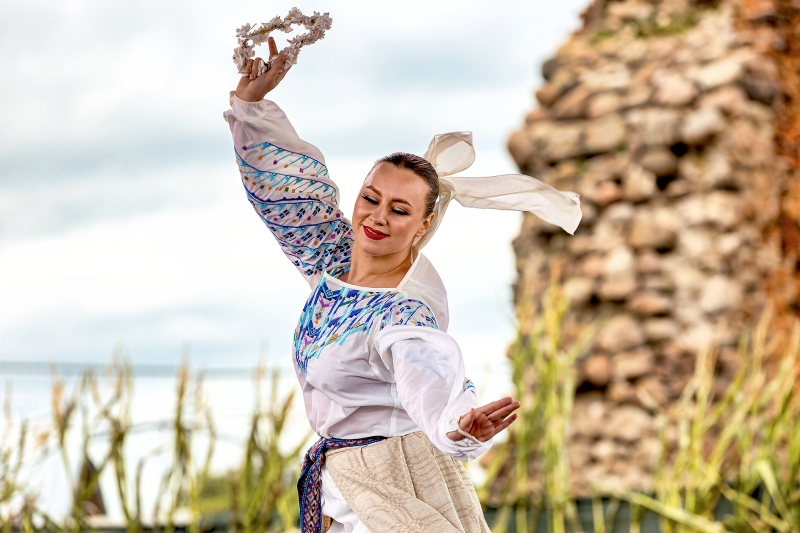
Irina Grushova, Artistic Director of the ‘Khoroshki’ Ensemble
Source: Roberto Magni By Foto ReD Photographic Agency
Source: Roberto Magni By Foto ReD Photographic Agency
Belarusian Ensemble ‘Khoroshki’
Source: Roberto Magni By Foto ReD Photographic Agency
Source: Roberto Magni By Foto ReD Photographic Agency
Belarusian Ensemble ‘Khoroshki’
Source: Belarusian Ensemble ‘Khoroshki’
Source: Belarusian Ensemble ‘Khoroshki’
Belarusian Ensemble ‘Khoroshki’
Source: Roberto Magni By Foto ReD Photographic Agency
Source: Roberto Magni By Foto ReD Photographic Agency
Belarusian Ensemble ‘Khoroshki’
Source: Roberto Magni By Foto ReD Photographic Agency
Source: Roberto Magni By Foto ReD Photographic Agency
Belarusian Ensemble ‘Khoroshki’
Source: Belarusian Ensemble ‘Khoroshki’
Source: Belarusian Ensemble ‘Khoroshki’
Belarusian Ensemble ‘Khoroshki’
Source: Roberto Magni By Foto ReD Photographic Agency
Source: Roberto Magni By Foto ReD Photographic Agency
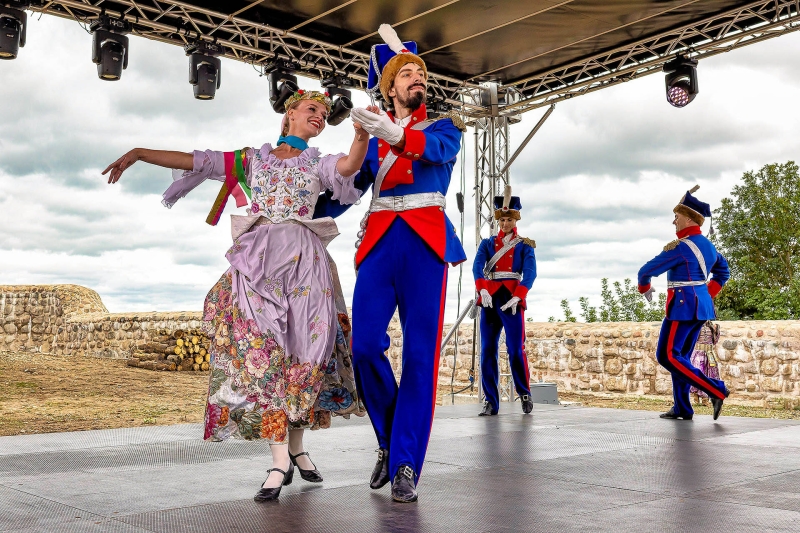
Belarusian Ensemble ‘Khoroshki’
Source: Roberto Magni By Foto ReD Photographic Agency
Source: Roberto Magni By Foto ReD Photographic Agency
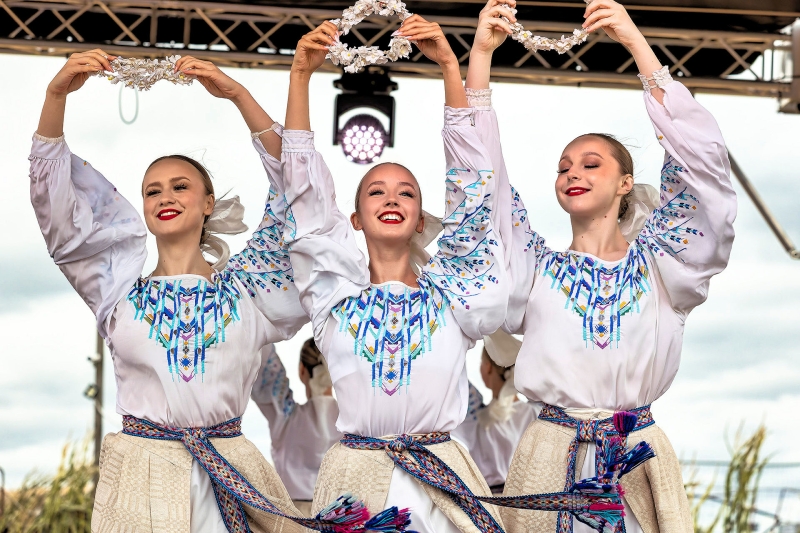
Belarusian Ensemble ‘Khoroshki’
Source: Belarusian Ensemble ‘Khoroshki’
Source: Belarusian Ensemble ‘Khoroshki’
Olga Venskaya, Mikhail Svito and the Khoroshki Ensemble
Source: Roberto Magni By Foto ReD Photographic Agency
Source: Roberto Magni By Foto ReD Photographic Agency
more information: https://www.redmagazine.red
Liability for this article lies with the author, who also holds the copyright. Editorial content from USPA may be quoted on other websites as long as the quote comprises no more than 5% of the entire text, is marked as such and the source is named (via hyperlink).